The Convergence of IT and SCADA: A New Model for Industrial Automation Development
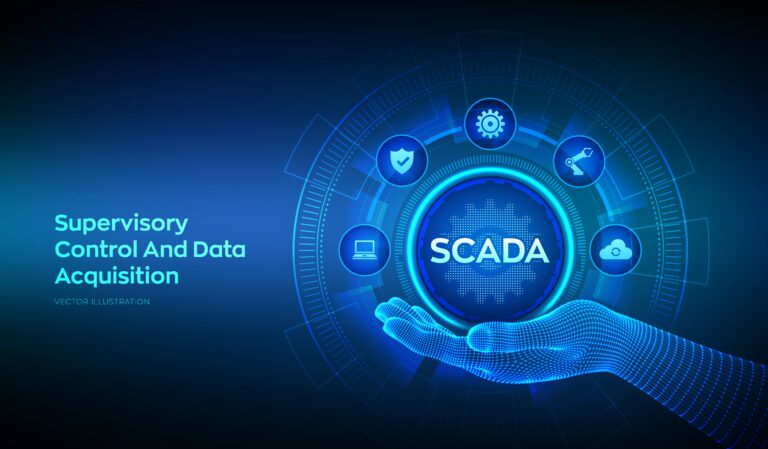
For decades, industrial control systems and enterprise software evolved along separate paths. Control systems prioritized reliability and stability; enterprise software prioritized speed, iteration, and scalability. Today, those worlds are beginning to converge. Modern SCADA platforms – particularly web-based architectures such as Inductive Automation’s Ignition – are reshaping how industrial systems are built, deployed, and maintained. As a result, the development methodologies long used in IT are starting to influence the way automation solutions are engineered.
Within Process and Data Automation (PDA), this convergence is playing out inside the company’s Digitalization Group (DSG). Historically focused on the connection between enterprise systems and factory operations, DSG now finds itself working at the intersection of web software and industrial control. For Eric Williams, Digitalization Group Manager at PDA, the shift represents something larger than a technology upgrade.
“SCADA systems are increasingly becoming web applications. Once that happens, it changes not just the tools you use – it changes how you think about building systems.” That shift in thinking is leading to a new model for industrial automation development.
Designing Systems That Outlive Their Developers
One of the most persistent challenges in industrial automation is long-term maintainability. Systems often evolve over decades, while engineering teams inevitably change. To address this, PDA’s DSG team is advocating for a philosophy that might sound familiar to modern software engineers: the system architecture should be independent of the individual developer who built it.
As Ethan Caplea, a Solution Specialist II at PDA describes it, the goal is code without a “coding accent.” Rather than each developer bringing their own stylistic conventions, projects follow strict internal standards designed to produce a consistent structure across systems. The implications are significant. When systems follow predictable architectural patterns:
- Engineers can step into a project and immediately understand its structure
- Maintenance and troubleshooting become faster and less risky
- Upgrades can be implemented more frequently with far less friction
In effect, the system becomes institutional knowledge rather than personal knowledge – a critical distinction for infrastructure expected to operate for decades.
When SCADA Starts to Behave Like Software
Web-based SCADA platforms have unlocked something else: the ability to adopt development models that were previously impractical in industrial automation. Historically, SCADA deployments often followed a “big delivery” model. Systems were designed, built, and then deployed largely as a completed solution. Modern web architecture enables something different. Instead of waiting for a fully completed system, development teams can now release features incrementally. Components can be developed, tested, and introduced in stages, allowing operational teams to interact with the system as it evolves.
This shift mirrors the agile development models common in enterprise software—and it fundamentally changes how integrators and clients work together. Project roadmaps become living documents, priorities shift as operational demands evolve, and clients are integrated into the development process in ways that were rarely possible before.
DevOps Arrives on the Plant Floor
The convergence with IT development practices becomes even more evident in the adoption of DevOps-inspired workflows. In this model, development and deployment follow a structured progression:
- Engineers develop and test functionality in isolated systems
- Updates are introduced to client’s non-production environments for validation
- Once confirmed, releases are pushed into production
This approach enables something powerful: continuous improvement without sacrificing operational stability. Multiple engineers—or even client teams—can contribute to development simultaneously while maintaining clear release checkpoints. If an issue appears, updates can be rolled back quickly without disrupting operations.
For organizations accustomed to traditional SCADA development cycles, the impact can be striking. “These approaches have been standard in IT for years,” says Williams. “But in control systems integration, they represent a real evolution in how projects are delivered.”
A Shared Language Between IT and Operations
Another important effect of web-based automation platforms is cultural rather than technical. As industrial systems increasingly resemble modern software applications, the gap between IT and operations begins to narrow. Development tools, architectural patterns, and release cycles become more familiar to enterprise software professionals. That shared understanding makes collaboration between departments significantly easier.
For integrators, it also creates a new opportunity: solutions can be designed with both operational reliability and enterprise software practices in mind.
Building the Foundation for Future Industrial Applications
The push toward standardization and modular development is also laying the groundwork for the next generation of industrial software. Structured architectures, reusable components, and consistent data models create systems that are easier to extend – whether for advanced analytics, enterprise integration, or emerging AI-driven capabilities. AI systems learn most effectively from environments where patterns, naming conventions, and data structures are predictable. By building applications on standardized foundations, organizations are not only improving maintainability today but also creating the kind of structured environments where AI tools can meaningfully assist production teams in the future.
As AI becomes integrated into SCADA systems, production teams will be able to consult AI agents for process optimization, maintenance teams will rely on predictive and prescriptive analytics linked to ERP and CMMS platforms, and executives will gain the ability to forecast production costs and evaluate profitability with greater accuracy.
The Evolution of Control System Integration
These shifts point to a larger transformation: industrial automation is moving into a new era. SCADA systems are no longer just visualization tools for plant operations. Increasingly, they are software platforms – systems that combine operational awareness with the flexibility and scalability of modern web applications.
For integrators such as Process and Data Automation, that evolution requires new ways of thinking about development, collaboration, and long-term system design. The organizations that succeed in this transition will be those that combine the reliability expected in industrial environments with the adaptability of modern software engineering. And in that convergence, the future of industrial automation is beginning to take shape.