Ctrl+Alt+Mfg Ep. 21: The Business Behind Automation, with Jeremy Anderson of Process and Data Automation
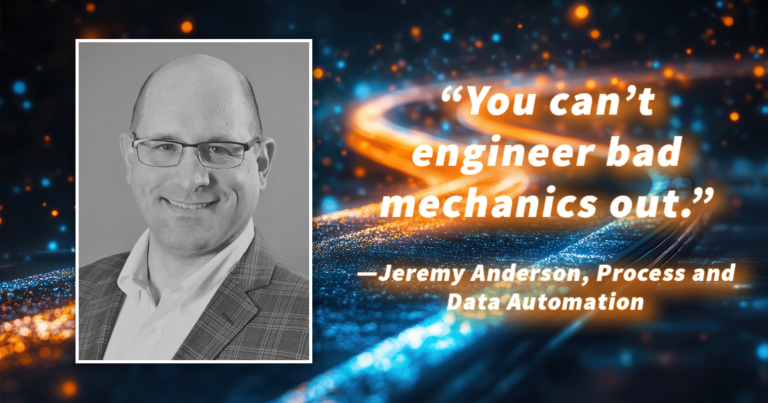
Jeremy Anderson of Process and Data Automation discusses his journey from field service technician to president and why successful automation requires more than technology, including strong processes, risk management and engaged customers.
At a time when manufacturing leaders are being urged to adopt artificial intelligence (AI), expand automation and counter a growing skills gap, Jeremy Anderson offers a useful corrective: Do not let the technology conversation outrun the business conversation.
Anderson, president of Process and Data Automation, joined the Ctrl+Alt+Mfg podcast from the CSIA Conference in Baltimore. His perspective is grounded in integration work, where a technically elegant solution still has to survive operations, risk reviews, shifting product demands and the people who use it.
For integrators and manufacturers, innovation matters but so do the structures that support it.
From the panel outward
Anderson did not set out with a conventional leadership plan. “It was the path that found me,” he said.
A natural tinkerer, he started in his father’s business, where a laptop handed to him for troubleshooting became an early introduction to programmable logic controllers. That first exposure reshaped his career.
“Then finding out that like, wow, there’s this magical little device that I can use to not stick my hands in the panel,” Anderson said. “That became very empowering.”
The journey from landing wires to selling automation solutions and leading teams created a broad view of how decisions travel through a project.
“Just all those different facets provide a unique perspective,” he said.
That perspective informs how Process and Data Automation develops people. Rather than assuming talent must stay on a single track, Anderson described moving capable employees into different roles until the right fit emerges.
“We knew we had the right people, but maybe we just didn’t have that right seat for them yet,” Anderson said.
Engineers, service personnel, project managers and business leaders see different versions of the same customer problem. Time spent in another seat can build respect for those differences before they become a delivery issue.